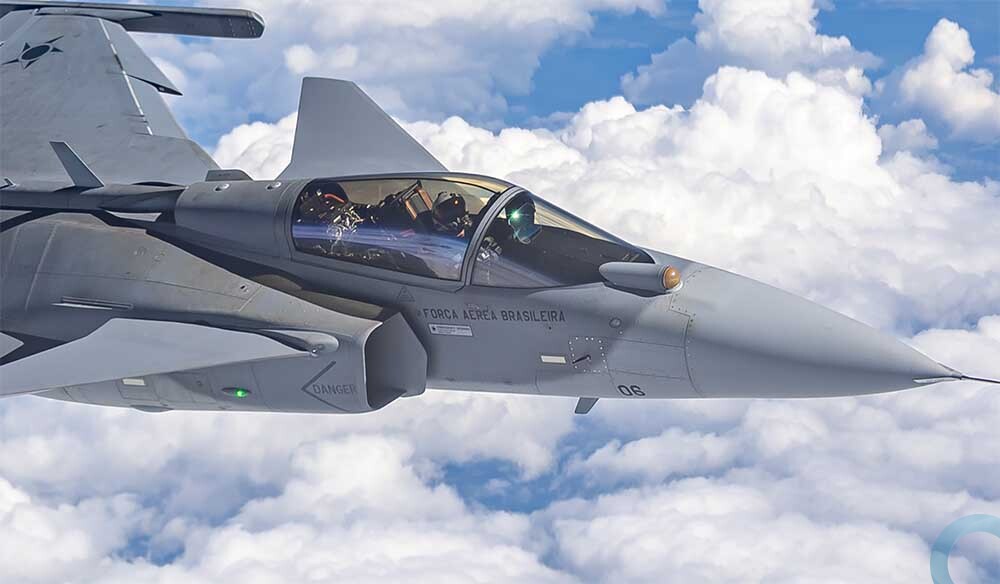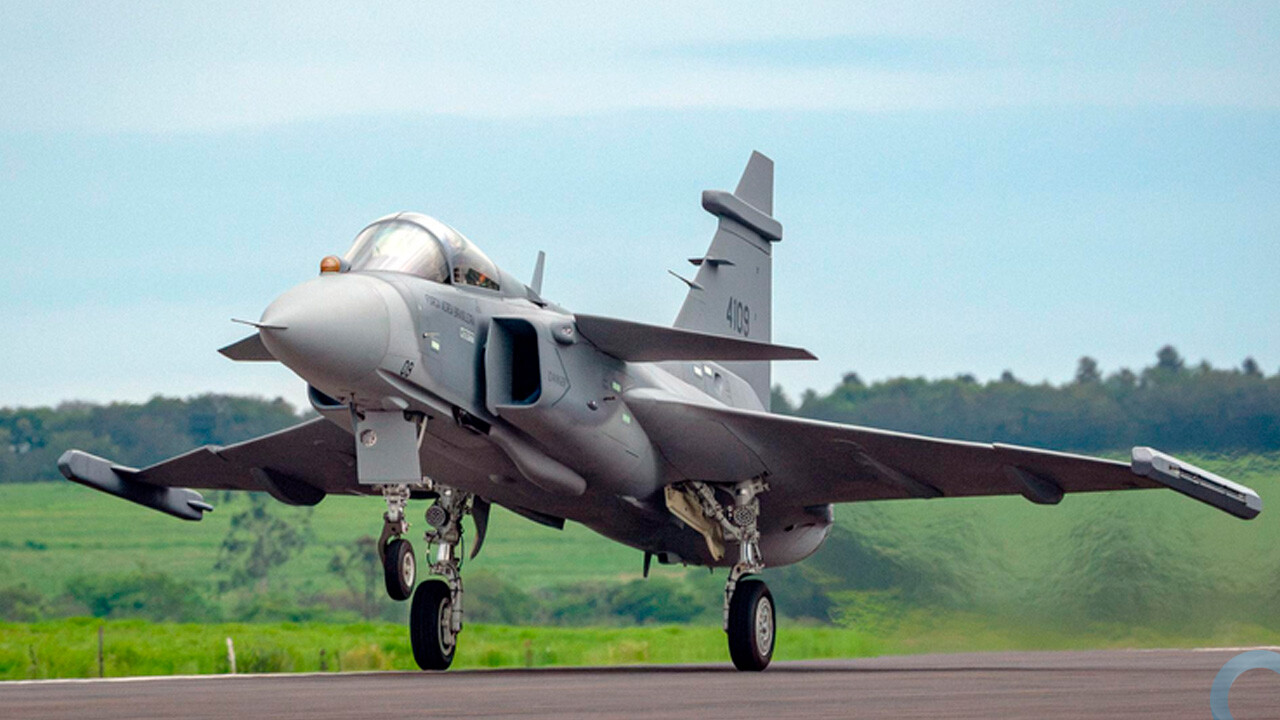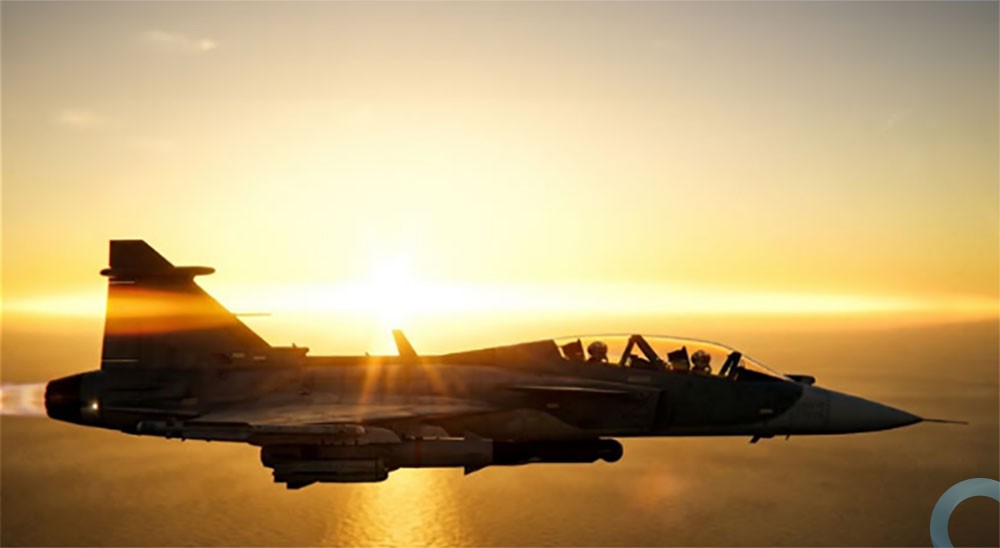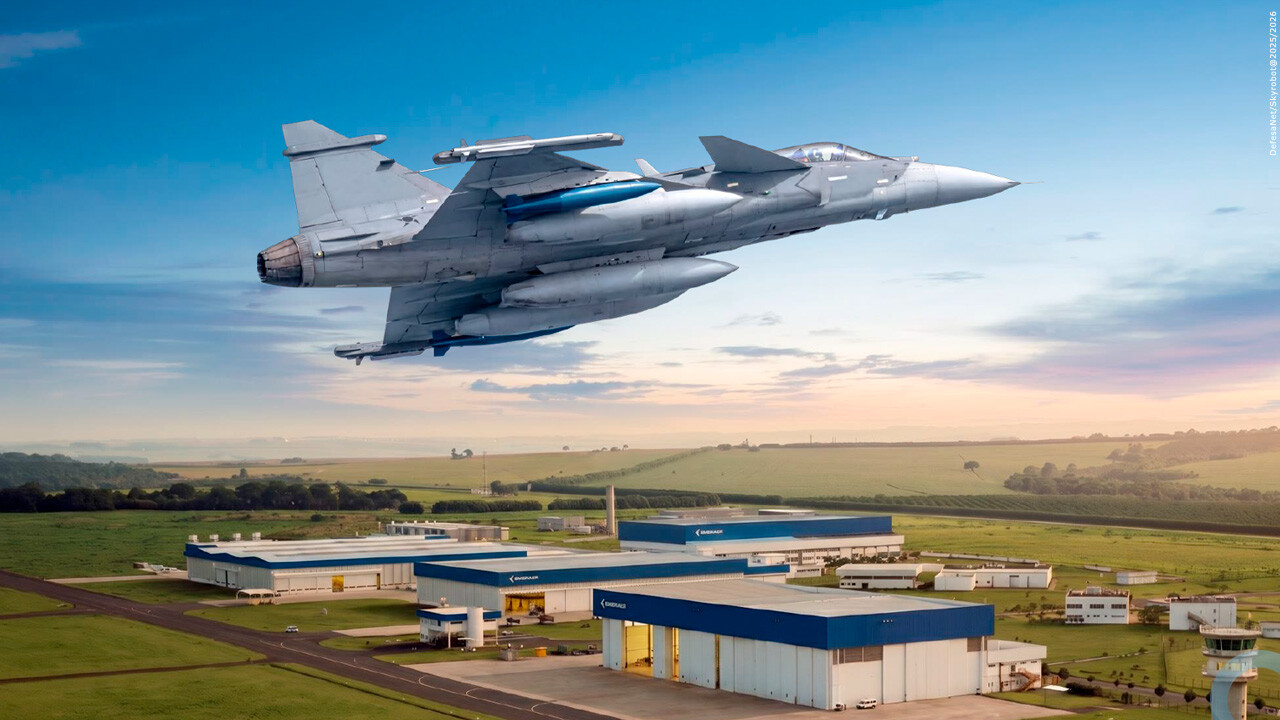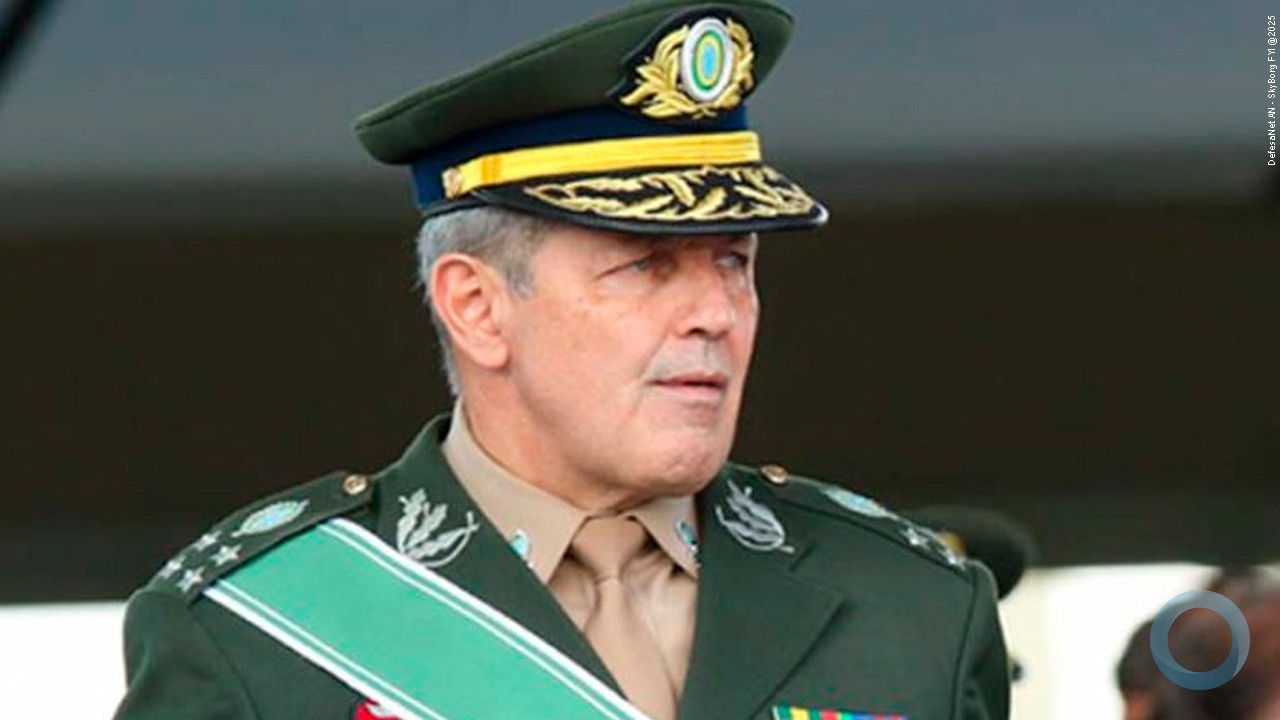




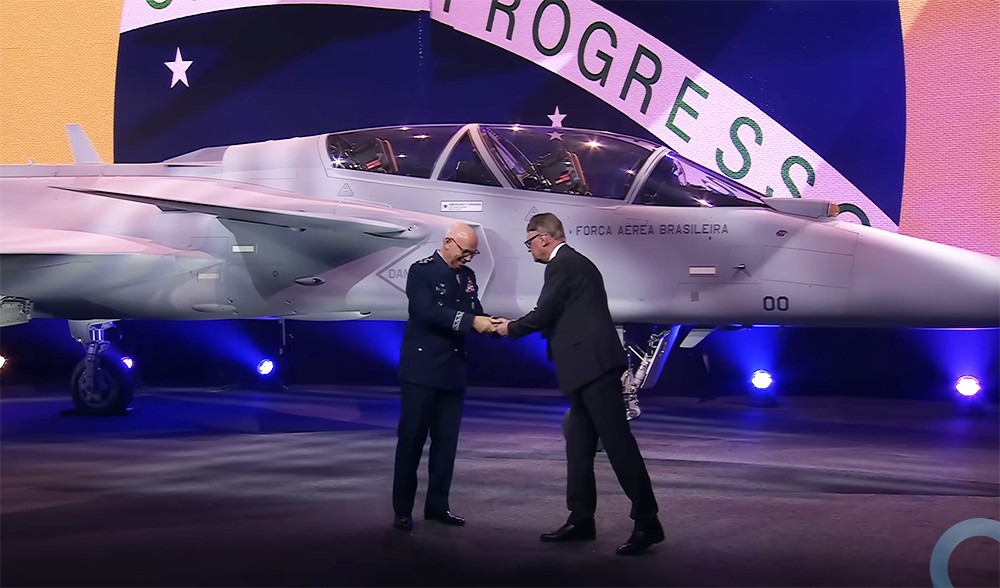
Air Force Commander Lieutenant-Brigadier Marcelo Damasceno receives the LogBook of the first Gripen F-39 F from Lars Tossman, VP of SAAB. Video capture.
The Brazilian Air Force wants 66 Gripen fighter jets: between operational need and political reality.
Read the Portuguese – Version A FAB quer 66 GRIPEN: Entre a Necessidade Operacional e a Realidade Política
Nelson During
Editor-in-Chief DefesaNet
The possibility of expanding the Brazilian Air Force ‘s fleet of F-39 Gripen E/F fighter jets has gained renewed momentum behind the scenes in Brasília. Although there is still no formal decision from the federal government, the FAB’s intention is clear: to significantly increase the current order of 36 aircraft and move towards a total fleet of 66 fighter jets.
The plan currently under discussion envisions a two-stage acquisition. The first stage would be carried out through an addendum corresponding to 25% of the original contract, allowing the purchase of ten more aircraft. In a second stage, a new contract for 20 more units would be negotiated , according to a letter of intent signed this week, possibly through a governmental agreement between Brazil and Sweden.
In practice, a G2G (Government-to-Government) agreement would be the most viable way to acquire a second batch without the need to open a new international bidding process , preserving the continuity of the program and the investments already made by the country.
If both stages are completed, the Brazilian fleet would reach 66 aircraft , a number that has been considered by the Air Force itself for many years as the minimum desirable to sustain a fighter force compatible with Brazil’s continental dimensions and strategic responsibilities.
The goal didn’t come about by chance.
The 66 Gripen fighters would allow for the equipping of at least five front-line squadrons, fully replacing the Mirage 2000s previously operated by the First Air Defense Group (GDA) , the AMX attack fighters , and a significant portion of the F-5M fleet, whose retirement is expected to occur gradually over the next decade.
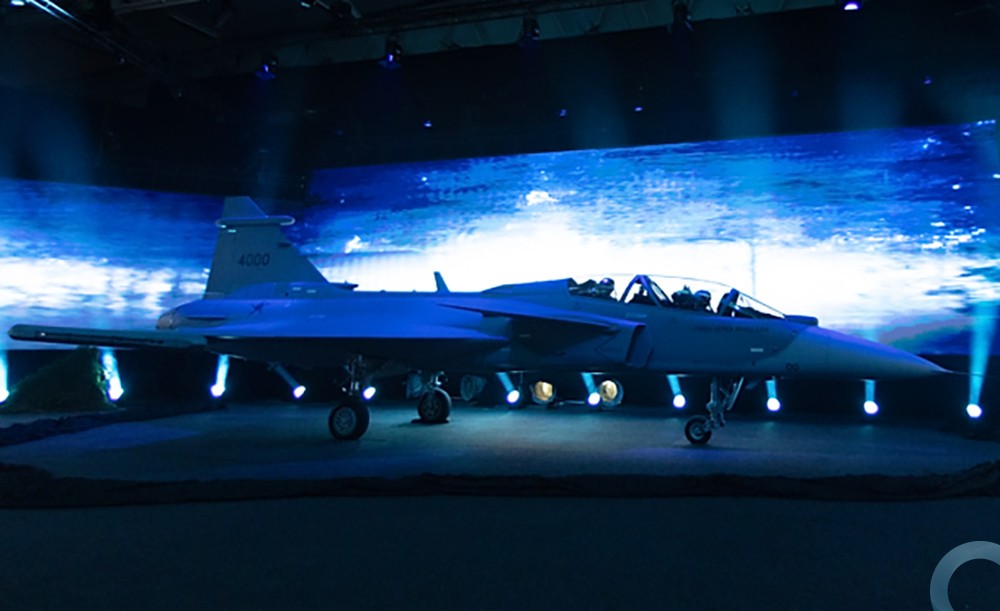
More than just a quantitative expansion, this is a long-term vision to rebuild the combat capability of Brazilian fighter aviation and ensure a modern, technologically advanced, and sustainable air force for the coming decades.
However, between the FAB’s intention and the signing of the contracts, there is a decisive factor: politics.
The program depends directly on the availability of budgetary resources and, above all, on the strategic priorities of the government that will be in power when the final decisions need to be made.
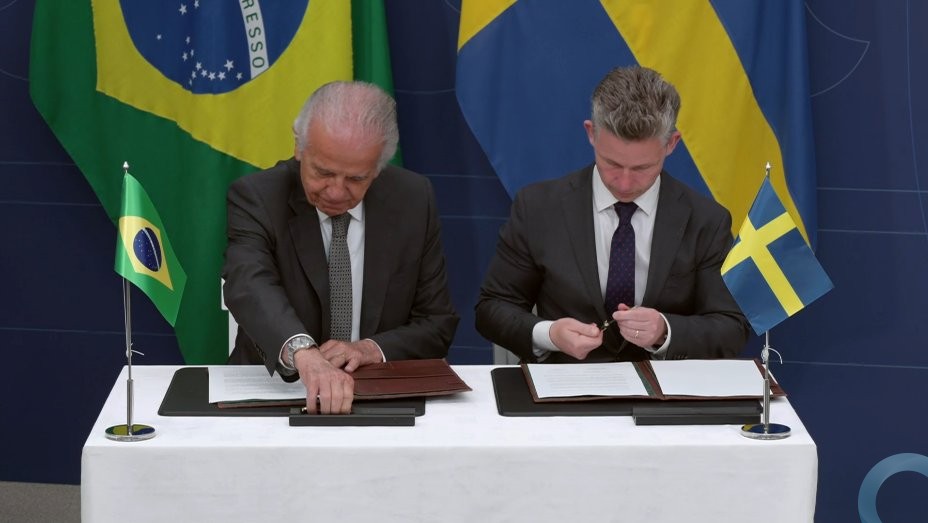
Brazilian Defense Minister José Múcio and Swedish Defense Minister Pal Jonson sign a declaration in Stockholm on June 4, 2026.
If the current government direction continues, the strategic partnership with Sweden is likely to be preserved and deepened . In this scenario, the Gripen would remain the backbone of the Brazilian fighter aviation, making fleet expansion a natural evolution of the program already underway.
On the other hand, a potential change of government could bring new assessments of Brazil’s defense priorities and international strategic relationships. Depending on the direction adopted by the future administration, there could be a closer relationship with Washington, creating opportunities for more intense cooperation with the US defense industry and for the analysis of other alternatives in future programs.
This does not necessarily mean abandoning the Gripen program. After all, Brazil has already invested billions of reais in the program, developed specific infrastructure, trained highly specialized human resources, and created an important industrial base associated with the project. Furthermore, the technology transfer and the participation of national industry represent strategic assets that would be difficult to discard.
However, an additional factor could significantly influence this scenario.
Paradoxically, the Gripen’s biggest strategic competitor in Brazil may not be an American fighter jet, but the success of EMBRAER itself in the United States.
If the C-390 Millennium gains traction with the United States Air Force (USAF) , whether as a complement to or replacement for part of the tactical transport fleet currently in operation, the natural trend will be a deepening of industrial and military relations between Brasília and Washington .
The potential success of the Brazilian aircraft in the North American market would place EMBRAER in an unprecedented strategic position within the United States defense ecosystem, strengthening institutional ties, expanding opportunities for technological cooperation, and increasing Brazil’s relevance as an industrial partner of the American defense base.

The image above is captured from the C-390 Millennium campaign website for the US Armed Forces. EMBRAER is assembling an ambitious and well-organized support structure for this campaign.
This new context could expand the influence of the U.S. defense industry in Brazil and create future pressure for greater interoperability between the Brazilian Armed Forces and their Western partners, especially in long-term programs.
The impact would not be immediate nor necessarily directed at the Gripen program. However, future decisions regarding combat aircraft, mission systems, weaponry, communications, and operational integration would be analyzed within a different strategic environment than the one that existed when the F-X2 was decided.
Regardless of the political landscape, there is a growing consensus among experts and the military: 36 aircraft are insufficient to fully meet the operational needs of a regional power with continental dimensions and vast responsibilities for airspace surveillance and defense.
The central question is no longer whether the Brazilian Air Force needs more Gripen fighter jets.
The real question is when will Brazil have the political, budgetary, and strategic conditions to transform this need into reality ?
For now, the 66 Gripen fighter jets remain a strategic objective of the Brazilian Air Force . However, their realization will depend less on military planners and more on the political and economic decisions that will be made in the coming years.
The challenge for Brazil is not defining which fighter jet it wants to operate. That decision has already been made. The real challenge will be ensuring the continuity of the investments necessary to transform a fleet of 36 aircraft into a combat force capable of adequately meeting the defense needs of a country of continental dimensions.
More than a discussion about aircraft, this is a choice about Brazil’s strategic positioning in the coming decades: deepening the partnership built with Sweden around the Gripen or integrating more broadly into the industrial and technological defense ecosystem led by the United States. In both cases, the decision transcends fighter aviation and reaches the very role that Brazil intends to play on the international stage.