




Brazil and Türkiye: A Strategic Partnership in Defense, Drones, Armored Vehicles, and Space Technology
Note DefesaNet
Text in Portuguese
BRASIL e TURQUIA: uma Parceria Estratégica em Defesa, Drones, Blindados e Tecnologia Espacial
Ther Editor
Cooperation with Turkish industry opens up prospects for the national production of armored vehicles, unmanned aerial systems, and the development of space technologies, strengthening the Brazilian Defense Industrial Base.
The rapprochement between Presidents Luiz Inácio Lula da Silva and Recep Tayyip Erdoğan opens new perspectives for deepening relations between Brazil and Turkey, particularly in the defense and technology sectors. More than just expanding bilateral trade, this rapprochement offers opportunities to establish long-term industrial partnerships involving strategic companies from both countries. Among the initiatives of greatest interest are the possible domestic production of the TULPAR tracked armored vehicle from Otokar; cooperation on the Bayraktar TB3 armed drones from Baykar, intended to meet the needs of the three Brazilian Armed Forces; and the development of projects in the space sector with Fergani Space Technologies.
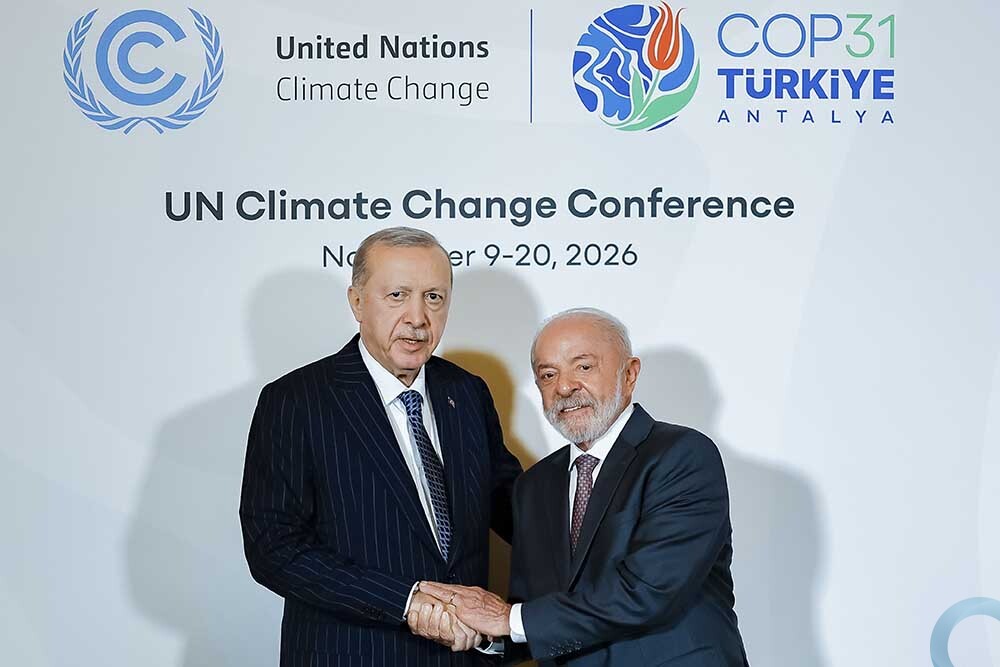
Photo: Ricardo Stuckert / PR
In the land sector, the potential production of the TULPAR in Brazil represents an opportunity to modernize the armored capabilities of the Brazilian Army and strengthen the Defense Industrial Base . Developed by Otokar, the TULPAR is a modular platform that can assume different configurations, including an infantry fighting vehicle and a main battle tank equipped with a 120 mm cannon. Manufacturing within the country, accompanied by technology transfer, participation of Brazilian companies, and the development of a local supply chain, should be a central element of any negotiation. The participation of the Italian company Leonardo, with its HITFACT MkII 120 mm turret, adds an international dimension to the project and opens up possibilities for technological integration between companies from different countries.
The second axis involves unmanned aerial systems. The eventual incorporation of the Bayraktar TB3, developed by Baykar , represents an opportunity to expand the operational capabilities of the Brazilian Army, Navy , and Air Force . Although conceived with shipboard operation capabilities, including from ships with flight decks and compatible facilities, the TB3 also presents relevant characteristics for land and air operations. Its employment possibilities include intelligence, surveillance, reconnaissance, and attack, with the use of guided weapons. The adoption of a common platform by the three branches of the Armed Forces could generate economies of scale in acquisition, training, maintenance, and logistical support, respecting the operational particularities of each. A partnership with Baykar that includes technology transfer, production or assembly in Brazil, personnel training, and integration of national systems would represent a significant advance for the Brazilian defense industry.
The third axis, perhaps the least known but of great strategic importance, involves Fergani Space Technologies , a Turkish company linked to the Baykar business ecosystem and dedicated to the development of space technologies. Among its initiatives are small satellites, orbital transfer vehicles, and its own positioning and navigation systems, including the Uluğ Bey project . For Brazil, closer ties in this segment could open opportunities for cooperation in small satellites, communications, territorial monitoring, intelligence and surveillance applications, and the development of positioning technologies. This is a particularly relevant area for a country with continental dimensions, an extensive land border, and one of the largest maritime areas under its responsibility. Mastering these technologies also has direct implications for defense, communications security, and the protection of strategic infrastructure.
Defensefrom Brazil
The convergence of these three initiatives demonstrates that the partnership with Turkey can go far beyond the conventional acquisition of military equipment . Brazil is interested in expanding its industrial capacity, mastering critical technologies, and reducing external dependencies in strategic sectors. To achieve this, negotiations need to prioritize the effective transfer of technology, the participation of national companies, the training of engineers and technicians, local maintenance, and the possibility of joint exports to third-party markets.
Brazil and Turkey share complementary characteristics. Turkish industry has accumulated significant experience in the development and export of land-based systems, unmanned aerial vehicles, and space technologies. Brazil, in turn, possesses a relevant industrial base, companies with engineering capabilities, and a defense market that can offer scale for long-term projects. Cooperation could also stimulate the participation of Brazilian universities, research centers, and high-tech companies.
The challenge will be to transform political rapprochement into concrete projects, with timelines, defined funding, and verifiable industrial commitments. The creation of permanent mechanisms for bilateral coordination could contribute to the continuity of initiatives and the establishment of long-term priorities.
The agenda involving Otokar, Baykar, and Fergan offers an opportunity for Brazil and Turkey to move from a traditional commercial relationship to strategic technological and industrial cooperation. If structured with a long-term vision, this partnership could contribute to modernizing the Brazilian Armed Forces, strengthening the national industry, and consolidating Brazil as a more relevant player in the international defense market.