


Brigadier General André Luiz de Souza,
1st Sergeant Ruy Sales de Oliveira
Note DefesaNet
Portuguese text
Operação Punhos de Aço 2025: Um salto significativo para de qualidade para as Forças Blindadas Brasileiras
The Editor
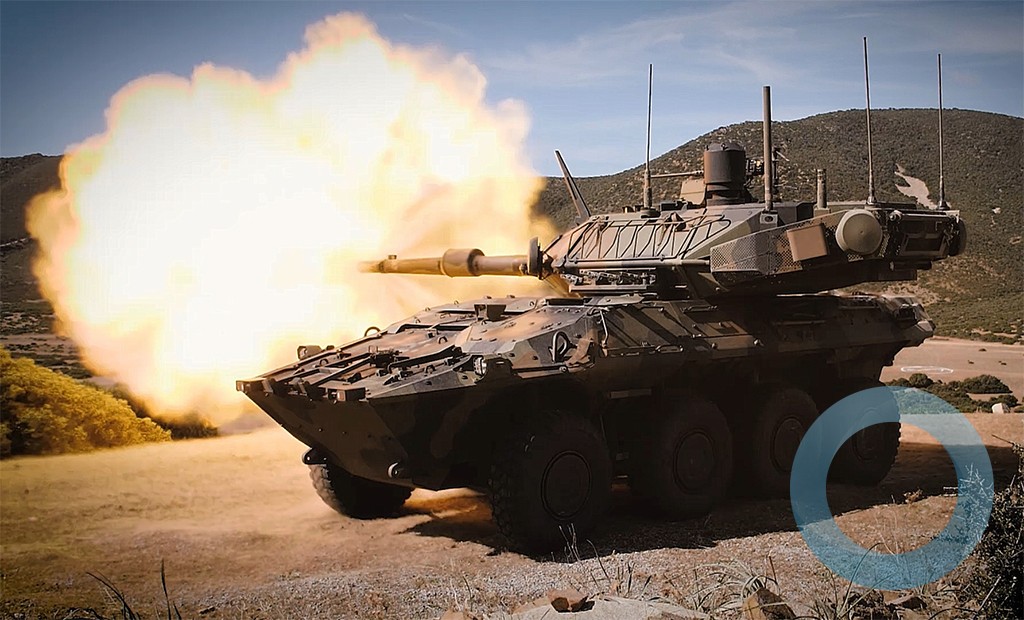
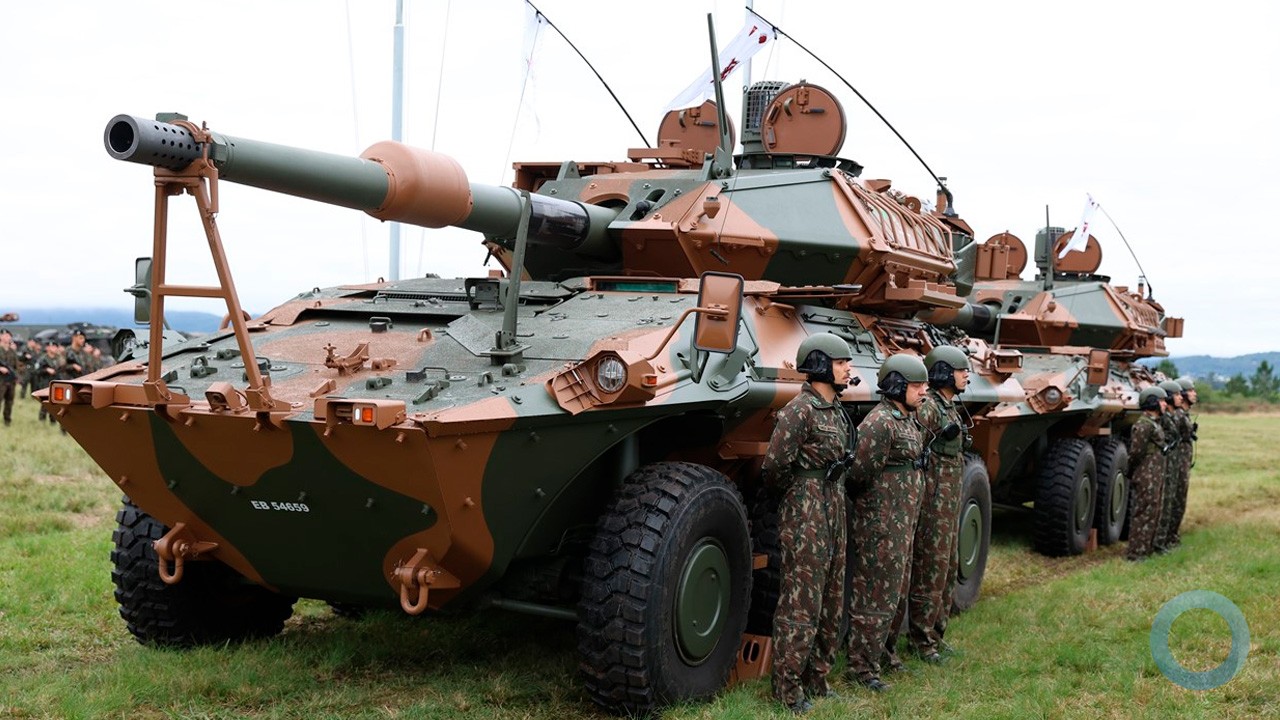
The evolution of armored vehicles in the Brazilian Army has been marked by a constant pursuit of increased shock action, mobility, and protection. In this context, Operation Punhos de Aço 2025¹ represented a milestone for the 6th Armored Infantry Brigade – Niederauer Brigade (6th Bda Inf Bld), as the Centauro II BR 8×8 Wheeled Multipurpose Cavalry Fighting Vehicle (VBC Cav-MSR 8×8 BR) was employed for the first time in a tactical operation in the Land Force.
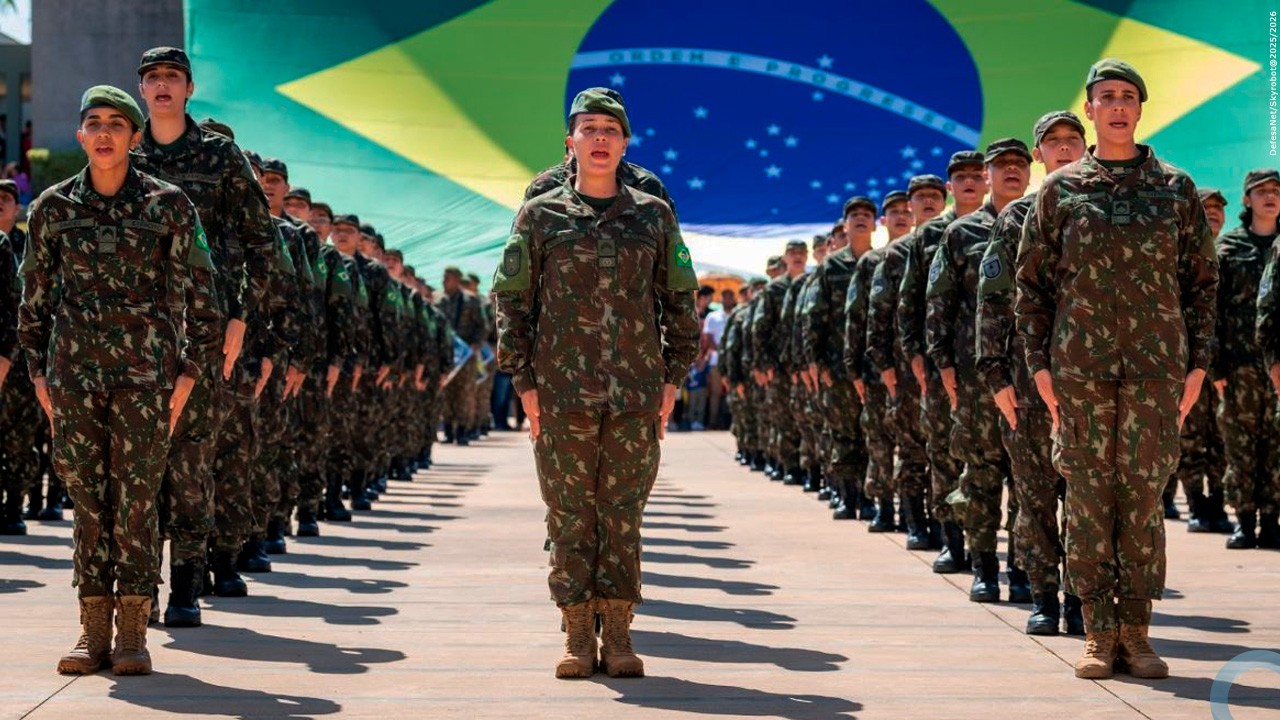
Operation Iron Fists is a traditional advanced training exercise, conducted by the 6th Armored Infantry Brigade, which culminates the year-long preparation effort. In the 2025 edition, all military organizations (MOs) of the Niederauer Brigade participated in the activity.
A hypothetical tactical scenario was devised in which the large armored unit conducted offensive operations on the ground. First, the assembly area was occupied, followed by the march into combat in the open, with the vanguard being a unit-sized task force.
Having established contact with the enemy’s hastily organized positions, three other task forces surpassed the vanguard and launched an opportunistic attack. As a result of this attack, favorable conditions were created for the exploitation of the success, which occurred only on paper, in a plan developed by the Brigade’s general staff, its units, and subunits prior to going to the training field.
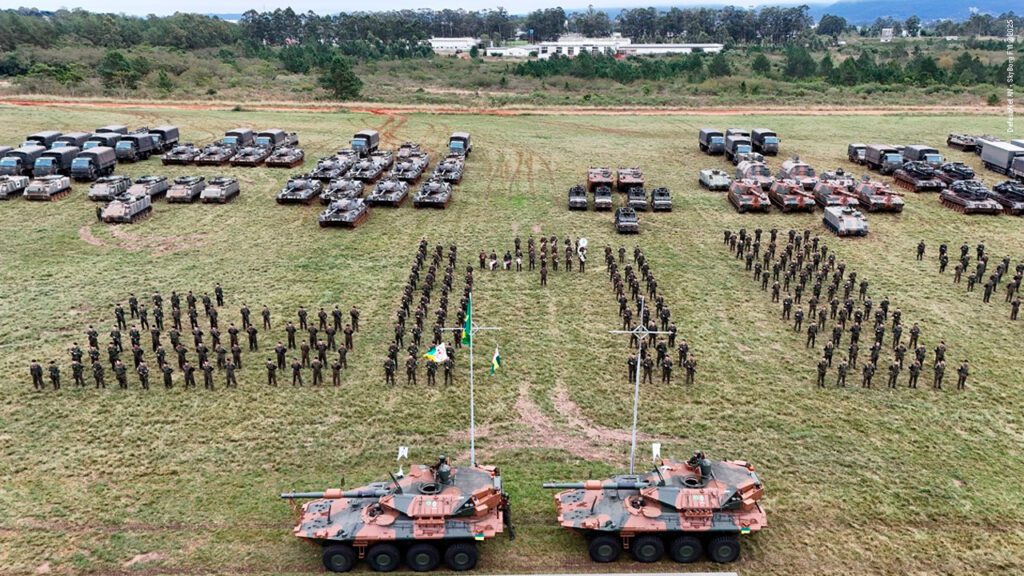
Throughout the entire maneuver period (march to combat and opportunity attack), the 6th Mechanized Cavalry Squadron (6th Esqd C Mec)² was assigned the important mission of securing an exposed flank of the Brigade, through which enemy interference was possible, with the potential to compromise troop progress and the fulfillment of their tasks. For this purpose, the two recently received Centauro II BR 8×8 Medium Wheeled Armored Carriers (or simply Centauro II BR)³ were employed, in combination with Guarani Medium Wheeled Armored Personnel Carriers, organic to this subunit.
With the goal of simulating a high-intensity conventional warfare scenario, the Operation Iron Fist maneuver involved executing operations with an emphasis on integrating new technological capabilities on the battlefield.
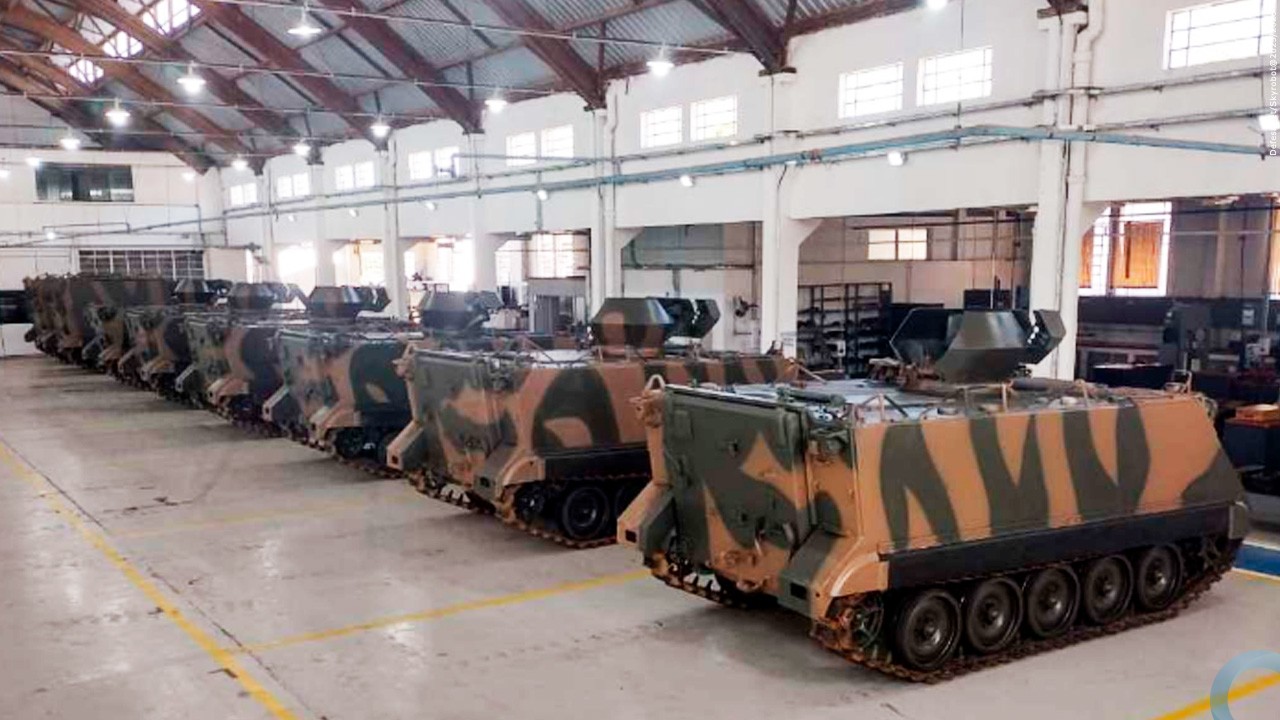
The participation of the Centauro II BR and its analysis in operational activity made it possible to draw a comparison with the already established, but obsolete, EE-9 Cascavel Armored Reconnaissance Vehicle (VBR EE-9 Cascavel).
As a result, several operational advantages were observed in favor of the Centauro II BR: its greater firepower (120 mm cannon); the existence of sensors with long-range thermal and night vision capabilities; the availability of an integrated networked Command and Control (C2) system; improved tactical mobility; and superior armor, including protection against mines and improvised explosive devices.
Among these various advantages, the greatest gain observed was in the means of observation, target acquisition, and situational awareness, which operate in any lighting or weather condition.
The ATTILA D (Long Range Commander Panoramic Sight) Panoramic System, installed for the vehicle commander, allows for 360º observation, independent of the turret, with stabilized images, high-resolution day and thermal cameras, and laser rangefinders.
Thus, the battlefield scanning and target acquisition capabilities increase exponentially, with positive effects on the speed of engagements, which become optimized, prioritized, and coordinated, increasing both the effectiveness of the firing platform’s use and the crew’s survivability in combat.
The LOTHAR SD (Land Optronic Thermal Aiming Resource – Second Generation) Fire Control System, operated by the shooter, provides second-generation thermal vision, laser rangefinder, automatic target tracking, and digital ballistic calculation, ensuring extremely high accuracy on the first shot, even while moving, against static or dynamic targets, day or night.
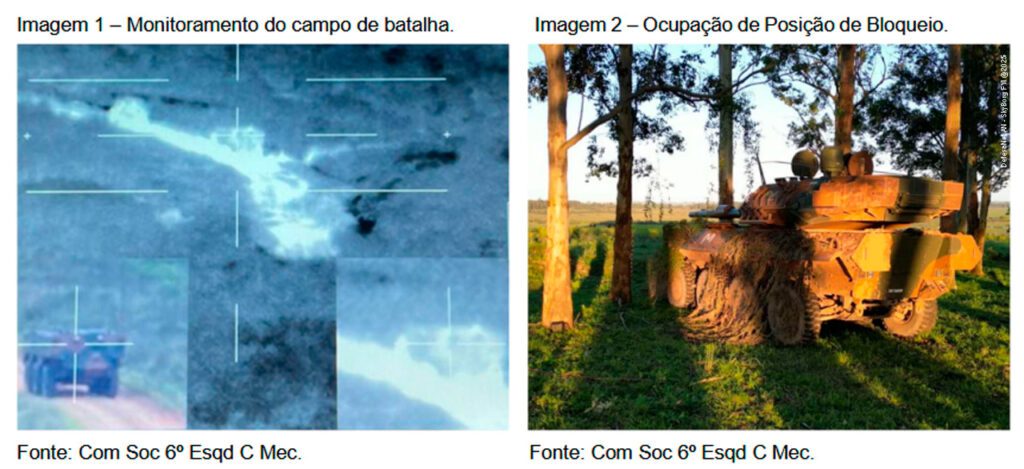
During the occupation of different blocking positions, in the course of the flank security mission, the Centauro II BR put to the test the full capabilities of the ATTILA D and LOTHAR SD sensors, detecting with proven effectiveness the armored vehicles and troops of the opposing force, even before they entered the engagement zone, enabling accurate simulated firing at a safe distance.
As a result, a significant increase in the ability to observe the battlefield was observed, allowing for more accurate monitoring of threats and significantly reducing the risk to the garrison, something not achieved by the VBR Cascavel in this measure.
In this way, in reconnaissance missions, the Centauro II BR observation system was generally decisive. The crews were able to identify camouflaged targets, disembarked troops, and vehicles moving through complex terrain, also contributing to the search efforts of the Brigade’s intelligence section and higher command, increasing the speed of the decision-making process at all levels.
The Cascavel, on the other hand, lacking similar optical and electronic capabilities, depends on external lighting devices, which inevitably compromise the efficiency of the mission.
With the use of the Centauro II BR, greater range was achieved in reconnaissance, surveillance, and security activities, with high discretion and proficiency in identifying high-value tactical targets for the operation.
It is worth highlighting that the ability for continuous and independent observation between the commander and the gunner of the Centauro II BR allowed for the identification of possible enemy approach routes coming from different directions. In this dynamic, thanks to the existence of the ATTILA D system, while the gunner engaged one target, the commander was already initiating the designation of another threat.
Furthermore, night vision and thermal sensors enabled constant surveillance, even during movements in wooded terrain without a clear line of sight, a situation in which the Cascavel tank has severe limitations. As a result, the 6th Mechanized Cavalry Squadron became an active and lethal flank guard barrier, deterring and preventing enemy infiltration attempts into the Brigade’s formation.
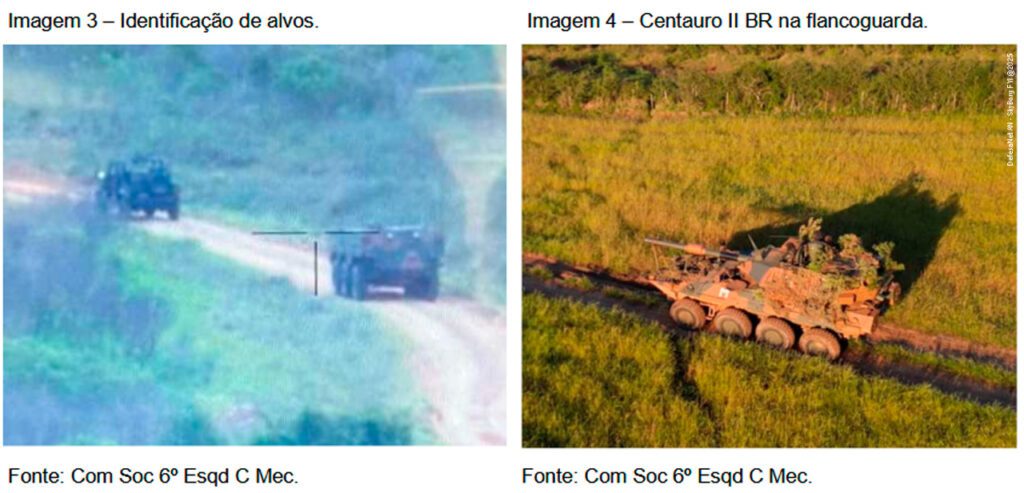
This time, it was possible to conclusively demonstrate the technological and operational superiority of the Centauro II BR over the Cascavel, especially regarding its advanced optronic systems and high firepower. Its ability to see and shoot first represents a paradigm shift.
Thus, the experience gained in Operation Iron Fists can be a first step towards new doctrinal discussions and the development of techniques, tactics and procedures better suited to the capabilities of the newly acquired vehicle³.
The story of the Centauro II BR in the Brazilian Army is just beginning. Its pioneering use in Operation Punhos de Aço 2025 was promising, generating motivation, pride, and a strong sense of belonging.
The geographical proximity of the 6th Armored Infantry Brigade to the Armored Training Center and the Southern Training Center reinforces the correctness of the decision to prioritize the distribution of the first two Centauro II BR tanks to the 6th Mechanized Cavalry Squadron .
This has provided, under very good conditions, the synergistic performance of the triad of teaching, simulation and training, which allows the development and wide dissemination of a mindset fully focused on the use of modern means in the Brazilian armored forces.
The same is expected from the incorporation of two EE-9 Cascavel (New Generation) Medium Wheeled Armored Reconnaissance Vehicles into the Niederauer Brigade’s inventory, scheduled for 2026.
otes:
¹ Held between October 6 and 10, 2025, at the Barão de São Borja Training Camp (Saicã), located in the municipality of Rosário do Sul-RS.
² The 6th Mechanized Cavalry Squadron, based in Santa Maria-RS, is one of the twelve Military Organizations of the 6th Armored Infantry Brigade.
The vehicles were received by the 6th Mechanized Cavalry Squadron on April 7, 2025.
-x-
(*) About the authors:
Brigadier General André Luiz de Souza Dias
graduated in 1996 from the Agulhas Negras Military Academy (AMAN) and comes from the Infantry branch. He currently commands the 6th Armored Infantry Brigade, based in Santa Maria, Rio Grande do Sul. Within the same Brigade, he commanded the Command Company in 2010-11 and the 29th Armored Infantry Battalion in 2019-20. In addition to the Brazilian Army Command and Staff Course, he completed the Staff Course of the Spanish Armed Forces and the Higher National Studies Course in Bolivia. He holds Master’s degrees in Military Operations and Military Sciences, both from Brazil, in Defense Policy and International Security from Spain, and in Security, Defense and Development from Bolivia. He is a member of the National Association of Veterans of the Brazilian Expeditionary Force (ANVFEB) and the Brazilian Institute of Military Geography and History (IGHMB).
First Sergeant Ruy Sales de Oliveira
graduated in 2008 from the Army Sergeants School (EsSA) in the Cavalry branch. He completed the Riding Instructor course at the Army Riding School (EsEqEx) in 2010 and the Sergeant Improvement Course at the Army Sergeants Improvement School (EASA) in 2018. He holds a certificate in the Operation of GUARANI Armored Vehicles from the Armored Instruction Center (CI Bld) and the Operational Employment Course on the Centauro II Armored Vehicle, completed in Italy in 2025. He currently serves in the 6th Mechanized Cavalry Squadron, located in Santa Maria-RS, directly operating the Centauro II Cavalry Combat Armored Vehicle. BR