

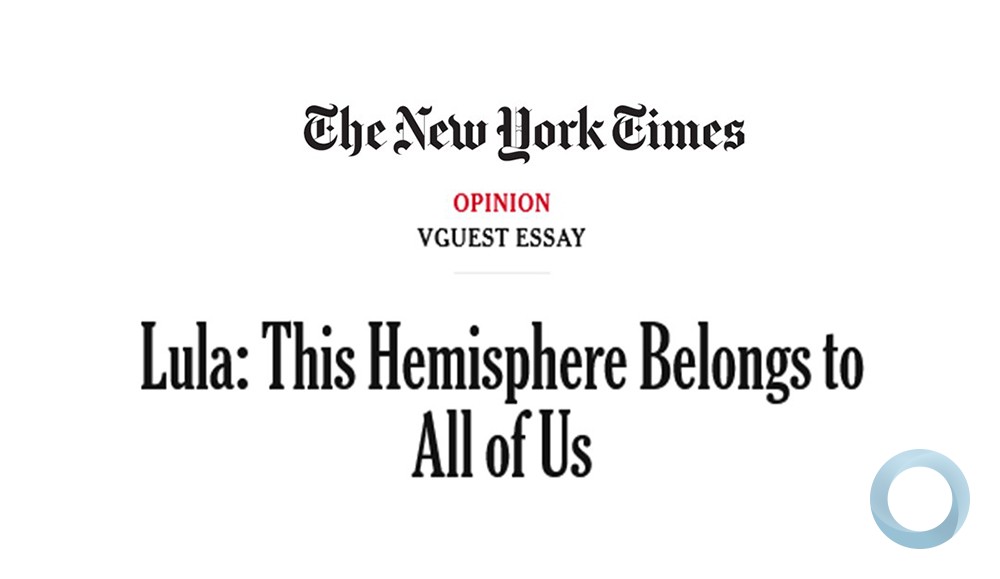
O Presidente Lula publicou um artigo no jornal The New York Times , edição de18 de janeiro de 2026. O texto original em inglês e tradução em português.
Nota DefesaNet
Tanto o artigo de Lula, no dia 18JAN2026, no The New York Times como o de Celso Amorim na revita The Economist seguem uma linha que merece ser analisada,
Claramente texto saidos da pena de Celso Amorim que ao longo de 25 anos, tantop no comando da Diplomacia, Defessa ou eminência parda sempre obteve resultados ou confrontos contestáveis.
1 – The New York Times – 18 Janeiro 2026, edição web, e 20 Janeiro edição impressa
Lula: Este Hemisfério Pertence a Todos Nós
Lula: This Hemisphere Belongs to All of Us
2 – The Economist – 19 Janeiro 2026
Celso Amorim – Como podemos viver em um mundo sem regras?
Celso Amorim – How can we live in a world without rules?
3 – Jornal Valor 12 Janeiro 2026
Ajuda de Lula à Venezuela tem cálculo político
O Editor
Lula: Este Hemisfério Pertence a Todos Nós
Por Luiz Inácio Lula da Silva
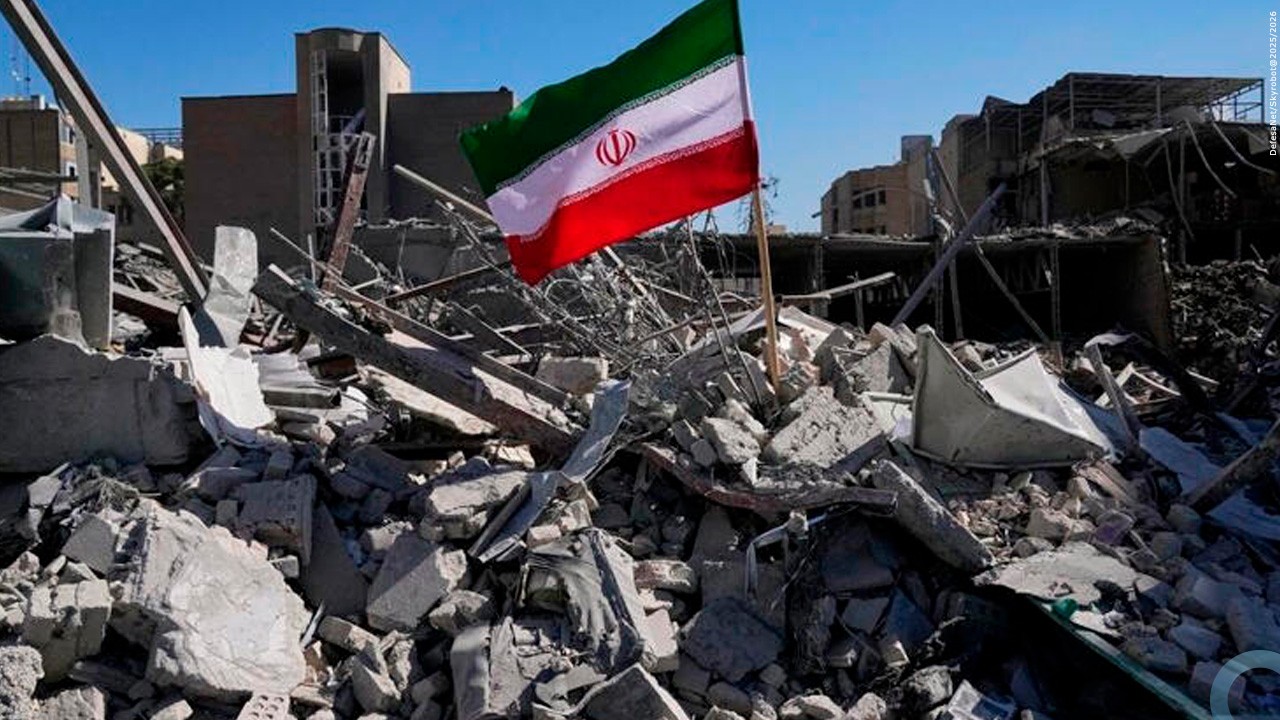
Os bombardeios dos Estados Unidos em território venezuelano e a captura de seu presidente em 3 de janeiro são mais um capítulo lamentável na contínua erosão do direito internacional e da ordem multilateral estabelecida após a Segunda Guerra Mundial.
Ano após ano, as grandes potências intensificam os ataques à autoridade das Nações Unidas e de seu Conselho de Segurança. Quando o uso da força para resolver disputas deixa de ser a exceção e se torna a regra, a paz, a segurança e a estabilidade globais ficam em risco. Se as normas forem seguidas apenas seletivamente, a anomia se instala e enfraquece não apenas os Estados individualmente, mas o sistema internacional como um todo. Sem regras acordadas coletivamente, é impossível construir sociedades livres, inclusivas e democráticas.
Chefes de Estado ou de governo — de qualquer país — podem ser responsabilizados por ações que minam a democracia e os direitos fundamentais. Nenhum líder tem o monopólio do sofrimento de seu povo. Mas não é legítimo que outro o faça. O Estado arrogar para si o direito de administrar a justiça. Ações unilaterais ameaçam a estabilidade mundial, interrompem o comércio e o investimento, aumentam o fluxo de refugiados e enfraquecem ainda mais a capacidade dos Estados de enfrentar o crime organizado e outros desafios transnacionais.
É particularmente preocupante que tais práticas estejam sendo aplicadas na América Latina e no Caribe. Elas trazem violência e instabilidade para uma parte do mundo que luta pela paz por meio da igualdade soberana das nações, da rejeição do uso da força e da defesa da autodeterminação dos povos. Em mais de 200 anos de história independente, esta é a primeira vez que a América do Sul sofre um ataque militar direto dos Estados Unidos, embora as forças americanas já tenham intervido na região anteriormente.
A América Latina e o Caribe abrigam mais de 660 milhões de pessoas. Temos nossos próprios interesses e sonhos a defender. Em um mundo multipolar, nenhum país deve ter suas relações exteriores questionadas por buscar a universalidade. Não seremos subservientes a empreendimentos hegemônicos. Construir uma região próspera, pacífica e pluralista é a única doutrina que nos convém.
Nossos países devem lutar por uma agenda regional positiva que seja capaz de superar diferenças ideológicas em prol de resultados pragmáticos. Queremos atrair investimentos em infraestrutura física e digital, promover empregos de qualidade, gerar renda e expandir o comércio dentro da região e com nações fora dela. A cooperação é fundamental para mobilizar os recursos de que tanto precisamos para combater a fome, a pobreza, o narcotráfico e as mudanças climáticas.
A história mostrou que o uso da força nunca nos aproximará desses objetivos. A divisão do mundo em zonas de influência e as incursões neocoloniais por recursos estratégicos são ultrapassadas e prejudiciais.
É crucial que os líderes das grandes potências entendam que um mundo de hostilidade permanente não é viável. Por mais fortes que essas potências sejam, elas não podem se basear simplesmente no medo e na coerção.
O futuro da Venezuela, e de qualquer outro país, deve permanecer nas mãos de seu povo. Somente um processo político inclusivo, liderado por venezuelanos, levará a um futuro democrático e sustentável. Esta é uma condição essencial para que os milhões de cidadãos venezuelanos, muitos dos quais estão temporariamente abrigados no Brasil, possam retornar em segurança para casa. O Brasil continuará trabalhando com o governo e o povo venezuelano para proteger as mais de 1.300 milhas de fronteira que compartilhamos e aprofundar nossa cooperação.
É nesse espírito que meu governo tem se engajado em um diálogo construtivo com os Estados Unidos. Somos as duas democracias mais populosas do continente americano. Nós, no Brasil, estamos convencidos de que unir nossos esforços em torno de planos concretos de investimento, comércio e combate ao crime organizado é o caminho a seguir. Somente juntos podemos superar os desafios que afligem um hemisfério que pertence a todos nós.”
The New York Times – Lula: This Hemisphere Belongs to All of Us
Jan. 18, 2026
By Luiz Inácio Lula da Silva
The United States’ bombings in Venezuelan territory and the capture of its president on Jan. 3 are yet another regrettable chapter in the continuous erosion of international law and the multilateral order established after World War II.
Year after year, major powers have intensified attacks on the authority of the United Nations and its Security Council. When the use of force to resolve disputes ceases to be the exception and becomes the rule, global peace, security and stability are jeopardized. If norms are followed only selectively, anomie sets in and weakens not only individual states but the international system as a whole. Without collectively agreed-on rules, it is impossible to build free, inclusive and democratic societies.
Heads of state or government — from any country — can be held accountable for actions that undermine democracy and fundamental rights. No leaders have monopolies over the suffering of their peoples. But it is not legitimate for another state to arrogate to itself the right to deliver justice. Unilateral actions threaten stability around the world, disrupt trade and investment, increase refugee flow and further weaken the capacity of states to confront organized crime and other transnational challenges.
It is particularly worrying that such practices are being visited on Latin America and the Caribbean. They bring violence and instability to a part of the world that strives for peace through the sovereign equality of nations, the rejection of the use of force and the defense of the self-determination of peoples. In more than 200 years of independent history, this is the first time that South America has come under direct military attack by the United States, though American forces previously intervened in the region.
Latin America and the Caribbean are home to more than 660 million people. We have our own interests and dreams to defend. In a multipolar world, no country should have its foreign relations questioned for seeking universality. We will not be subservient to hegemonic endeavors. Building a prosperous, peaceful and pluralistic region is the only doctrine that suits us.
Our countries must strive for a positive regional agenda that is capable of overcoming ideological differences in favor of pragmatic results. We want to attract investment in physical and digital infrastructure, promote quality jobs, generate income and expand trade within the region and with nations outside it. Cooperation is fundamental to mobilizing the resources that we so desperately need to combat hunger, poverty, drug trafficking and climate change.
History has shown that the use of force will never move us closer to these goals. The division of the world into zones of influence and neocolonial incursions for strategic resources are outdated and damaging.
It is crucial that the leaders of the major powers understand that a world of permanent hostility is not viable. However strong those powers may be, they cannot rely simply on fear and coercion.
The future of Venezuela, and of any other country, must remain in the hands of its people. Only an inclusive political process, led by Venezuelans, will lead to a democratic and sustainable future. This is an essential condition for the millions of Venezuelan nationals, many of whom are temporarily sheltered in Brazil, to be able to safely return home. Brazil will continue working with the Venezuelan government and people to protect the more than 1,300 miles of border that we share and to deepen our cooperation.
It is in this spirit that my government has engaged in constructive dialogue with the United States. We are the two most populous democracies on the American continents. We in Brazil are convinced that uniting our efforts around concrete plans for investment, trade and combating organized crime is the way forward. Only together can we overcome the challenges that afflict a hemisphere that belongs to all of us.”